
OCD, Sensory Challenges, and the Nervous System: Looking Beyond the Behaviors
When most parents hear the term OCD, they often picture repetitive behaviors like excessive hand washing, checking, organizing, or needing things “just right.” But for many children, OCD is far more complex and overwhelming beneath the surface. It can affect emotions, sleep, sensory processing, focus, routines, transitions, and even a child’s ability to feel safe and calm in their own body
At Pacific Pointe Chiropractic, we know how exhausting and emotional it can feel to watch your child struggle with intrusive thoughts, sensory sensitivities, emotional outbursts, or rigid behaviors while trying everything you can to help. Many parents tell us they feel stuck constantly managing meltdowns, fears, anxiety, or compulsive routines without fully understanding why their child’s nervous system seems to stay in a constant state of stress.
What many families are never told is that OCD and sensory challenges are deeply connected to the nervous system..
What is OCD?
Obsessive Compulsive Disorder, commonly known as OCD, is a condition that affects how the brain and nervous system process thoughts, stress, emotions, and uncertainty. Children with OCD experience unwanted and repetitive thoughts, fears, or worries called obsessions. These thoughts can feel overwhelming and difficult to control.
To try and relieve the anxiety or discomfort those thoughts create, children may develop compulsions, which are repetitive behaviors, routines, or rituals that temporarily help them feel safer or more in control.
For some children, OCD may look like:
- Repeatedly asking the same questions for reassurance
- Excessive worrying about germs, sickness, or safety
- Needing routines done in a very specific way
- Repetitive checking behaviors
- Difficulty handling transitions or unexpected changes
- Intrusive thoughts that create fear or anxiety
- Repeating words, actions, or movements
- Becoming extremely distressed when things feel “out of order”
Many children with OCD are incredibly aware that their thoughts or behaviors may not fully make sense, but their nervous system still feels stuck in a cycle of stress and urgency. This can be exhausting not only for the child, but for the entire family as well.
OCD is not simply a child being “particular” or wanting things neat and organized. It is often a sign that the nervous system is struggling to regulate stress and process information appropriately.
For many families, understanding the “why” behind these behaviors can be one of the first steps toward finding hope and support.
Understanding OCD Beyond the Surface
Obsessive Compulsive Disorder, or OCD, is a condition where the brain becomes stuck in repetitive thought patterns and behaviors. Obsessions are intrusive thoughts, fears, or worries that feel impossible to ignore. Compulsions are repetitive actions or routines that temporarily help a child feel relief or control.
For children, this can look very different than what most people expect. Some children repeatedly ask the same questions for reassurance. Others become extremely distressed if routines change, clothing feels uncomfortable, noises are overwhelming, or transitions do not happen exactly as expected.
Many children with OCD also experience sensory processing challenges because the nervous system is constantly on high alert. Their brains may struggle to properly filter sensory input, making everyday experiences feel overwhelming or unsafe.
This can show up as:
- Sensitivity to sounds, lights, textures, clothing, or food
- Emotional meltdowns during transitions or unexpected changes
- Repetitive movements or rituals
- Trouble sleeping or calming down
- Anxiety around germs, contamination, or safety
- Difficulty focusing or regulating emotions
- A constant need for reassurance or control
For many families, these behaviors are not simply “bad habits” or personality quirks. They are signs of a nervous system that is overwhelmed and struggling to regulate.
The Nervous System Connection
When the nervous system becomes stuck in stress mode, the body can begin operating in a constant fight or flight state. Instead of feeling calm, adaptable, and regulated, children may remain tense, hypervigilant, emotionally reactive, or sensory defensive.
This chronic stress response can affect how the brain processes sensory information, emotions, behavior, digestion, sleep, immune function, and focus.
At Pacific Pointe Chiropractic, we focus on the neurological stress patterns underneath the behaviors. Through detailed neurological INSiGHT Scans, we look at how the nervous system is functioning and adapting to stress. These scans help us understand whether a child’s nervous system is stuck in an overwhelmed and dysregulated state.
Many parents are surprised to learn how often children struggling with OCD tendencies, sensory sensitivities, anxiety, emotional dysregulation, or focus challenges show signs of nervous system stress and imbalance.
Why Sensory Challenges and OCD Often Overlap
The brain and nervous system are constantly processing information from the environment. When the nervous system is overwhelmed, the brain can begin overreacting to sensory input and internal stress signals.
This is why many children with OCD tendencies also experience:
- Sensory seeking or sensory avoiding behaviors
- Difficulty tolerating certain environments
- Emotional rigidity or perfectionism
- Increased anxiety during transitions
- Repetitive routines that help them feel regulated
- Trouble calming down after stress or stimulation
For some children, compulsive behaviors may actually become the nervous system’s attempt to create predictability and safety in a world that feels overwhelming.
Millie’s Story

When Millie first began care at Pacific Pointe Chiropractic, her family was searching for answers and support for the challenges she was experiencing with emotional regulation, sensory processing, and focus. Everyday situations and new environments often felt overwhelming for her nervous system, and even simple tasks like sitting still could be incredibly difficult.
Her family shared that sensory input could quickly become too much for her body to process, leaving her overwhelmed, dysregulated, and struggling to adapt to different situations. Like so many parents, they were doing everything they could to help support her through therapies and interventions while still searching for deeper answers.
One of the most powerful moments during Millie’s journey came through her neurological scans.
During her first scans, it was difficult for Millie to sit still because her nervous system was so overwhelmed by the sensory input around her. But as her nervous system began becoming more regulated through neurologically focused chiropractic care, her family started noticing incredible changes.
Over time, Millie became calmer, more regulated, and better able to handle everyday challenges. She began sitting still more easily, regulating her emotions better, and making meaningful progress both at home and in school. Her family also shared that she was preparing to transition into a mainstream kindergarten classroom, something that once felt far out of reach.
Look at the scans above. On the left was Millie’s scan when she first came into our office. On the right is her scan after receiving care and supporting her nervous system regulation. These scans help show the incredible changes that can happen when the nervous system shifts out of stress mode and begins functioning from a calmer, more balanced state.
Millie’s story is such a beautiful reminder that when we support the nervous system, children are often capable of far more than anyone imagined.
A Different Approach to Supporting Children with OCD and Sensory Challenges
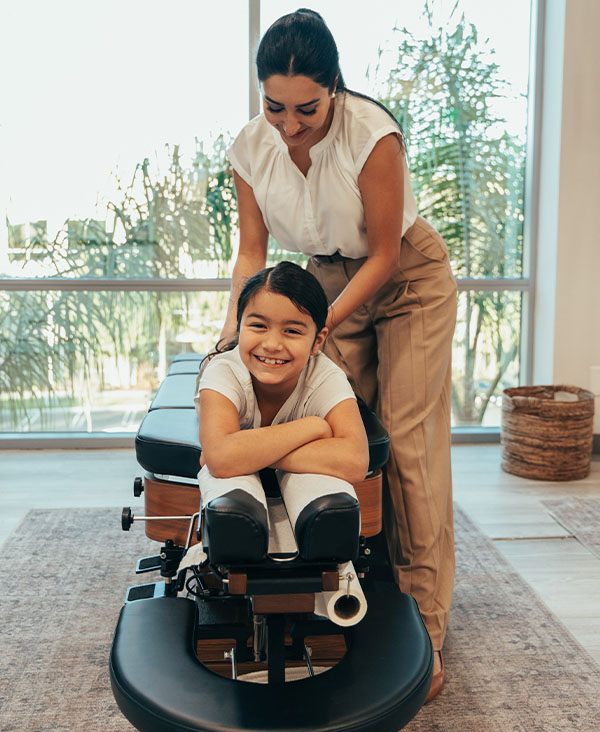
While every child is different, many families are looking for a more holistic approach that supports the nervous system itself rather than only managing symptoms.
At Pacific Pointe Chiropractic, our goal is to help children feel calmer, more regulated, adaptable, and connected through neurologically focused chiropractic care. By supporting nervous system regulation and reducing stress patterns within the body, many families notice improvements in areas such as:
- Emotional regulation
- Sensory processing
- Sleep quality
- Transitions and adaptability
- Focus and attention
- Anxiety and stress resilience
- Overall calmness and connection
We believe children thrive when their nervous system feels safe and supported.
Hope for Families
If your child is struggling with OCD tendencies, sensory sensitivities, anxiety, emotional overwhelm, or rigid behaviors, you are not alone. More importantly, your child is not “bad,” “dramatic,” or “too sensitive.”
Their nervous system may simply be overwhelmed and asking for support.
At Pacific Pointe Chiropractic, we are passionate about helping families better understand the neurological patterns underneath these challenges so children can begin functioning from a calmer, more regulated state.
There is hope. And there are answers worth exploring.
What Our Patients Are Saying
Pacific Pointe Chiropractic. ©2026 Demand Boost, Inc. — Chiropractic Marketing
